Tuesday, November 1, 2011

Home Theater For Dummies

Home Theater For Dummies Review
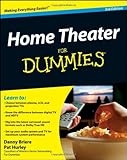


Home Theater For Dummies Overview


Overwhelmed with big screen TV and home theater audio options? What do you need to build the perfect home theater experience? Home Theater For Dummies, 3rd Edition shows you how to plan a home theater system and choose components that fit your budget and your room.

Beginning with the most basic information, this guide helps you choose what you need and put it all together. It explains DLP, 3LCD, HDMI, DTV, and HDTV so you can talk intelligently with salespeople at the electronics store. You’ll find out about Blu-ray, explore HD and satellite radio options, and see how to incorporate a Wii, Xbox, or Playstation 3 into your set-up. Learn to:

  • Choose among plasma, LCD, and projection TVs
  • Know the difference between digital TV and HDTV
  • Assess and choose an LCD TV, a new 3D TV, or an HD radio
  • Set up your audio system and TV for maximum performance
  • Use a Media Center or Home Theater PC
  • Fine-tune your system and add cool touches such as accessing home theater content from your cell phone
  • Explore HD and satellite radio options, CD players, DVD-Audio disks, and options for old cassettes and vinyl
  • Set up your system with the proper cables for each component, or learn what it takes to go wireless
  • Calibrate your video with a calibration disk, an optical comparator, or a DVD containing THX Optimizer

Get the perfect home theater experience by following the expert tips and techniques presented in Home Theater For Dummies, 3rd Edition. You’ll be watching movies and listening to audio in no time!

compareshoppingsite.info

Monday, October 31, 2011

Reimagining Equality: Stories of Gender, Race, and Finding Home

Reimagining Equality: Stories of Gender, Race, and Finding Home Review


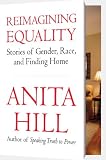
Reimagining Equality: Stories of Gender, Race, and Finding Home Overview


From the heroic lawyer who spoke out against Clarence Thomas in the historic confirmation hearings twenty years ago, Anita Hill's first book since the best-selling Speaking Truth to Power.

In 1991, Anita Hill’s courageous testimony during the Clarence Thomas confirmation hearings sparked a national conversation on sexual harassment and women’s equality in politics and the workplace. Today, she turns her attention to another potent and enduring symbol of economic success and equality—the home. Hill details how the current housing crisis, resulting in the devastation of so many families, so many communities, and even whole cities, imperils every American’s ability to achieve the American Dream.

Hill takes us on a journey that begins with her own family story and ends with the subprime mortgage meltdown. Along the way, she invites us into homes across America, rural and urban, and introduces us to some extraordinary African American women. As slavery ended, Mollie Elliott, Hill’s ancestor, found herself with an infant son and no husband. Yet, she bravely set course to define for generations to come what it meant to be a free person of color. On the eve of the civil rights and women’s rights movements, Lorraine Hansberry’s childhood experience of her family’s fight against racial restrictions in a Chicago neighborhood ended tragically for the Hansberry family. Yet, that episode shaped Lorraine’s hopeful account of early suburban integration in her iconic American drama A Raisin in the Sun.  Two decades later, Marla, a divorced mother, endeavors to keep her children safe from a growing gang presence in 1980s Los Angeles. Her story sheds light on the fears and anxiety countless parents faced during an era of growing neighborhood isolation, and that continue today. In the midst of the 2008 recession, hairdresser Anjanette Booker’s dogged determination to keep her Baltimore home and her salon reflects a commitment to her own independence and to her community’s economic and social viability. Finally, Hill shares her own journey to a place and a state of being at home that brought her from her roots in rural Oklahoma to suburban Boston, Massachusetts, and connects her own search for home with that of women and men set adrift during the foreclosure crisis. 

The ability to secure a place that provides access to every opportunity our country has to offer is central to the American Dream. To achieve that ideal, Hill argues, we and our leaders must engage in a new conversation about what it takes to be at home in America. Pointing out that the inclusive democracy our Constitution promises is bigger than the current debate about legal rights, she presents concrete proposals that encourage us to reimagine equality. Hill offers a twenty-first-century vision of America—not a vision of migration, but one of roots; not one simply of tolerance, but one of belonging; not just of rights, but also of community—a community of equals. 


buybestcheaptoday.info